
PRP Injections for Knee Osteoarthritis: What You Need to Know
If you have knee osteoarthritis, you've probably been told your options are pain medications, steroid injections, or eventually surgery. But there's a fourth option that's gaining significant traction in sports medicine and pain management — platelet-rich plasma therapy, or PRP.
At Sobel Spine & Sports in Phoenix, Dr. Jerry Sobel has been using PRP to help patients with knee osteoarthritis reduce pain, improve function, and avoid or delay surgery. Here's what you need to know about how it works, what the research shows, and whether it might be right for you.
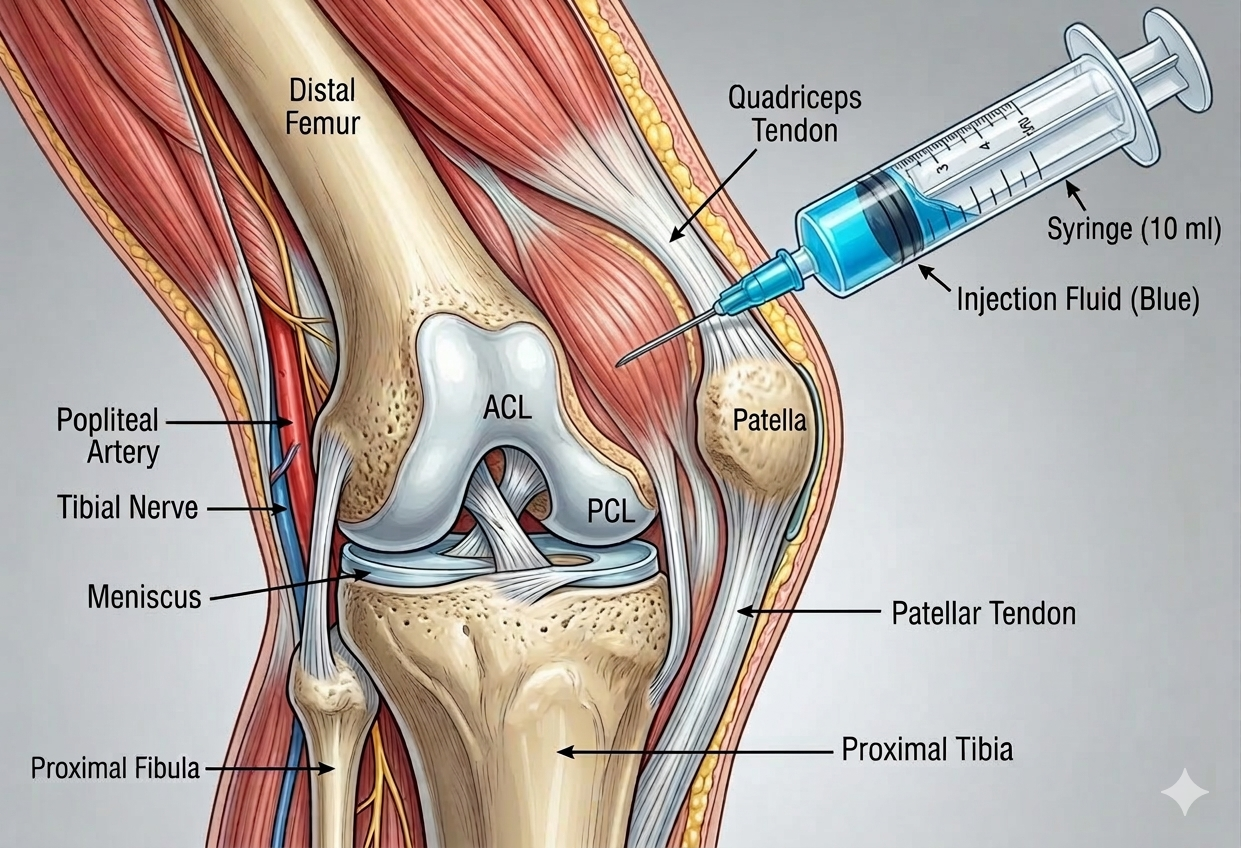
What Is Knee Osteoarthritis?
Knee osteoarthritis occurs when the protective cartilage in your knee joint gradually breaks down. As cartilage wears away, bones begin to rub against each other, causing pain, stiffness, and swelling. The condition affects millions of Americans and is one of the leading causes of chronic knee pain in adults over 50.
Traditional treatments — anti-inflammatory medications, cortisone injections, and hyaluronic acid injections — can help manage symptoms but don't address the underlying damage. That's where regenerative treatments like PRP come in.
What Is PRP and How Does It Work?
Platelet-rich plasma is made from your own blood. Here's the process:
We draw a small sample of your blood
It's placed in a centrifuge that spins rapidly to separate its components
The platelet-rich portion is concentrated and extracted
Dr. Sobel injects it directly into your knee joint using ultrasound guidance for precision
Platelets are best known for their role in clotting, but they also carry powerful proteins called growth factors that signal your body to repair damaged tissue. When concentrated and injected into an arthritic joint, these growth factors work to reduce inflammation, protect remaining cartilage, and promote healing.
What Is A2M — and Why Is Everyone Talking About It?
One of the most exciting recent discoveries in regenerative medicine is the role of alpha-2-macroglobulin — commonly called A2M — in protecting joint cartilage.
A2M is a naturally occurring protein found in your blood plasma. It acts as a powerful protease inhibitor — meaning it blocks the enzymes that break down cartilage. In an osteoarthritic joint, harmful enzymes called matrix metalloproteinases (MMPs) are constantly attacking and degrading cartilage. A2M essentially neutralizes these enzymes before they can do damage.
A2M also directly binds to inflammatory cytokines — the chemical signals that drive joint inflammation — and suppresses the inflammatory pathways that accelerate cartilage loss.
Here's the important connection to PRP: A2M is naturally present in blood plasma, which means standard PRP injections already contain A2M. When you receive a PRP injection, you're getting A2M along with the full spectrum of healing growth factors your blood contains.
Some practices now offer concentrated A2M preparations — called autologous protein solution or APS — that specifically increase the A2M concentration beyond what standard PRP provides. Early research on these formulations is promising, with one randomized controlled trial showing 65% improvement in knee pain scores at 12 months compared to 41% in a saline control group.
The science on A2M is still evolving, but the early evidence is compelling — particularly for patients with early to moderate osteoarthritis who want to slow cartilage breakdown and reduce joint inflammation.
What Does the Research Show About PRP for Knee OA?
The evidence supporting PRP for knee osteoarthritis has grown significantly over the past decade. Here's what the research shows:
PRP outperforms hyaluronic acid. Multiple studies comparing PRP to hyaluronic acid viscosupplementation show that PRP provides greater pain reduction and better functional improvement. The benefits of PRP also tend to last longer.
PRP outperforms corticosteroids long-term. While cortisone injections work faster initially, PRP produces superior results at 6 and 12 months. Importantly, repeated corticosteroid injections can actually damage cartilage over time — PRP does not carry this risk.
Results last 6-12 months. Most patients experience meaningful pain relief and improved function for 6 to 12 months after treatment. Some research suggests multiple injections may extend these benefits.
PRP works best for mild to moderate OA. Patients with early to moderate knee osteoarthritis tend to respond better than those with severe, end-stage disease. If you're trying to delay knee replacement surgery, PRP is worth discussing sooner rather than later.
PRP is safe. Because PRP is made from your own blood, the risk of allergic reaction or rejection is essentially zero. The most common side effects are temporary soreness and swelling at the injection site, which typically resolve within a few days.
How Does PRP Compare to Other Treatments?
| Treatment | Pain Relief | Duration | Cartilage Safe? |
|---|---|---|---|
| Cortisone | Fast | 6-12 weeks | No (with repeat use) |
| Hyaluronic acid | Moderate | 3-6 months | Yes |
| PRP | Good | 6-12 months | Yes |
| Surgery | Variable | Long-term | N/A |
PRP sits in an ideal middle ground — more effective and longer lasting than cortisone, without the cartilage risks of repeated steroid injections.
What to Expect at Sobel Spine & Sports
The procedure takes about 30-45 minutes from start to finish and is performed right in our Phoenix office — no hospital visit required.
Here's what happens:
Blood is drawn from your arm — about the same amount as a routine lab test
The blood is processed in our centrifuge while you wait
Dr. Sobel uses ultrasound guidance to inject the PRP precisely into the affected area of your knee
You rest briefly and go home the same day
After the injection:
Some temporary soreness and swelling is normal for 24-48 hours
Avoid strenuous activity for a few days
Most patients begin noticing improvement within 4-6 weeks
Full benefit is typically felt at 2-3 months
Most patients receive 1-3 injections depending on the severity of their condition and their response to treatment.
Is PRP Right for You?
PRP may be a good option if you:
Have mild to moderate knee osteoarthritis
Haven't gotten adequate relief from physical therapy or oral medications
Want to avoid or delay knee replacement surgery
Have had cortisone injections that stopped working or didn't last long enough
Are looking for a treatment that uses your body's own healing mechanisms
PRP is not appropriate for patients with severe end-stage arthritis, active infection, blood disorders, or certain blood-thinning medications.
Frequently Asked Questions
Does insurance cover PRP for knee osteoarthritis? Most insurance plans currently classify PRP as investigational for knee osteoarthritis and do not cover the procedure. It is typically an out-of-pocket expense. Call our office at 602-385-4160 and we can discuss pricing and what to expect financially.
How many PRP injections will I need? Most patients receive 1-3 injections. Dr. Sobel will evaluate your knee and recommend a protocol based on the severity of your arthritis and your goals.
How long before I feel results? Most patients notice improvement within 4-6 weeks. The full effect typically develops over 2-3 months as the growth factors do their work.
Can PRP regrow cartilage? Current evidence suggests PRP works primarily by reducing inflammation and slowing cartilage breakdown rather than regrowing cartilage. It may help preserve the cartilage you have rather than reverse existing damage — which is why earlier intervention tends to produce better results.
What is the difference between PRP and A2M injections? A2M is naturally present in standard PRP. Some practices offer concentrated A2M preparations that increase the amount of this protective protein beyond standard PRP levels. Dr. Sobel can discuss which approach is most appropriate for your specific situation.
How long do results last? Most patients experience relief for 6-12 months. Some patients benefit from repeat injections to maintain results over time.
Ready to Find Out If PRP Is Right for Your Knee?
Dr. Jerry Sobel has been treating knee pain and osteoarthritis non-surgically in Phoenix for 35 years. If you're tired of managing knee pain with medications that aren't working or cortisone shots that wear off faster every time, PRP may be worth discussing.
Call us at 602-385-4160 or schedule an appointment online. Same-week appointments are often available.
📍 Sobel Spine & Sports | 4550 E Bell Road, Suite 110 | Phoenix, AZ 85032
